Be Willing to Learn from Gen Z: What I Observed at Crosscon '26

Comment

Be Willing to Learn from Gen Z: What I Observed at Crosscon '26

This article was originally published at The Gospel Coalition (tgc.org)

Boomers like me tend to wax critical of the “lost generation” of people born roughly between 1997 and 2012. We read articles claiming this generation is glued to their phones and ruined by social media. We hear they’re anxious and depressed. We see they have short attention spans and diminished social skills. Sometimes they even wear pajamas in public or sweatpants to church! We wonder what will become of Gen Z, the first generation to have a life experience shaped so much by electronics and social media.

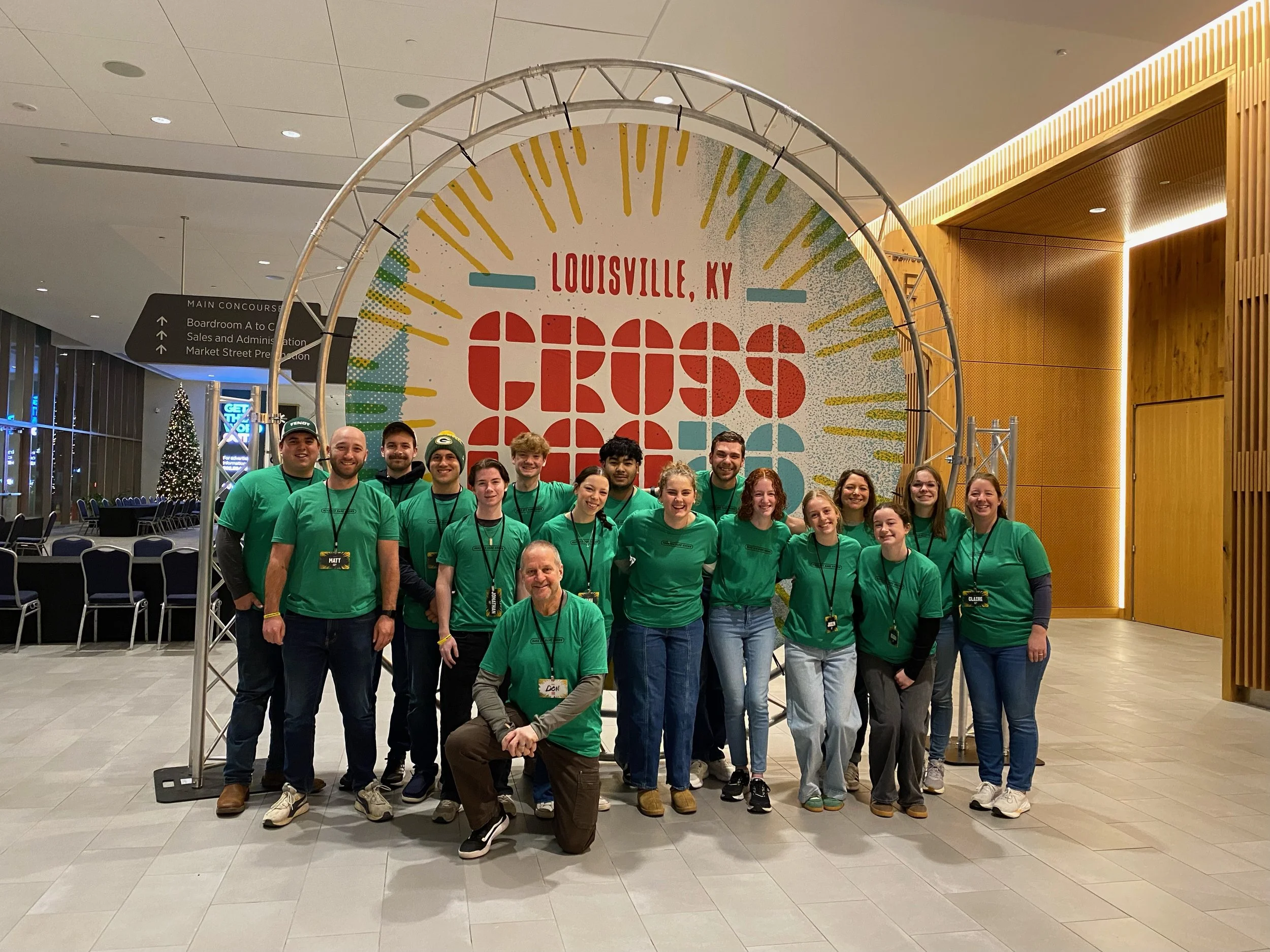
But a few weeks ago, I spent six days alongside thousands of Gen Zers, and if I’d ever given up this generation as lost, I earnestly recant my position. I was at CrossCon, a three-day conference conceived by David Platt, John Piper, and others. Held every year over the Christmas break, the gathering aims to help 18-to-25-year-olds deepen their understanding and love of the gospel, the local church, and missions.

Cross began in 2013 with about 3,500 participants, then dipped to around 2,000 attendees in 2016 before beginning to grow. This year, it swelled to 18,000 young people—so many that organizers had to split the conference into two back-to-back events. Next year, Cross will be moving to a 60,000-seat arena in Saint Louis.

Let me tell you why those 18,000 Gen Zers caused me to rethink my attitude toward them.

1. Gen Zers are hungry for truth, and they don’t need it to be truncated or gussied up to apprehend it.

What’s so remarkable and heartening about the steady increase in Cross participants over the years is that the conference, though aimed at a young crowd, has few bells and whistles to attract them. There were no strobe lights, rock walls, or gimmicks designed to keep their attention. Though the stage was hip and the merch was—I think the term is “lit”—Cross’s attraction is simply the gospel itself.

Every talk, every book, every bit of that merch was saturated with the clear message of the gospel of Jesus Christ and the dire need for that message to reach the nations. Cross is unapologetically Calvinistic and complementarian. I didn’t hear anyone complaining about that. What’s more, the most enthusiastic reception this year was for a couple of septuagenarians in sweaters, John Piper and Alistair Begg. Why? Because these men consistently speak the truth, grounded in God’s Word, with the sole purpose of making the gospel known to the generations—not relevant but known.

And this so-called lost generation was eating it up.

2. Gen Zers take the Bible seriously.

I was among the bookstore volunteers at Cross, and my wonder never diminished at the unrestrained glee I saw over piles of books. Gen Z went shopping for Christian biographies, biblical commentaries, and thick tomes on systematic theology.

I heard over and over as I checked folks out, “I’m so excited!” in reference to titles such as J. C. Ryle’s Expository Thoughts on the Gospels, John Bunyan’s Pilgrim’s Progress, or John Piper’s Don’t Waste Your Life—not to mention Scripture journals and Bibles.

Defying boomer complaints that peg them as incapable of sustained attention or profound thought, these Gen Zers bought 92,000 books—actual physical books—and received another 90,000 in giveaways. That’s an average of 10 books per participant!

3. Gen Zers are capable of sustained attention.

Each of the events this year encompassed three intense days of speakers, panel discussions, Q&As, breakout sessions, theologically rich worship, missionary testimonies, and encouragement that began early in the morning and didn’t relent until 11:00 p.m. With each passing day, I was struck by the lack of empty seats at any given time.

From the moment the doors opened in the morning, young people came pouring through. They milled about the exhibitors, bought books, or chatted in groups. But when it was time for a session to start, nearly every person was seated and ready. Journals were out, pens were poised, and Bibles were ready to be opened.

When the music started, the attendees were on their feet, singing earnestly. When it was time to pray, heads were bowed and the room fell silent. And when a speaker was at the podium, eyes were fixed on the stage or the massive screens, glancing away just long enough to jot some notes.

This attention and focus didn’t diminish from the first day to the last.

4. The Holy Spirit is working mightily in the hearts of Gen Zers.

At the end of each day, as I made my way to my hotel via the skywalk that stretches above Louisville’s main street, I encountered huddles of young people, with God’s Word and journals open, animatedly debriefing what they’d heard that day. One late evening, I happened on an impromptu hymn sing in the hotel, with around 50 Canadian kids gathered around a piano. They kept at it for over an hour.

Early in the mornings, as I reversed my steps, I passed lone participants having quiet time in a tucked-away corner of the lobby, Bibles open in their laps. There wasn’t a phone in sight.

5. Boomers should spend more time with Gen Zers.

Boomers, instead of lamenting this generation, what can we do to serve the youth and young adults in our church? How can we shift our attitude toward Gen Z from pessimism and cynicism to optimism, appreciation, and encouragement?

Psalm 145:4 compels older generations to “commend [God’s] works to another, and . . . declare [his] mighty acts.” Let’s pray for God to help us find ways to speak into this generation, who are decidedly not too distracted or impervious to the great call of Jesus Christ and his marvelous gospel.

I turned 64 a few days before the conference. I can guarantee that this wasn’t how I was spending my Christmas break 45 years ago. During my time at Cross, I saw 1 Timothy 4:12 played out before my eyes: “Let no one despise you for your youth, but set the believers an example in speech, in conduct, in love, in faith, in purity.”

From now on, I’ll apply Philippians 4:8 when thinking of Gen Z. Because what I witnessed at Cross, sweatpants notwithstanding, was indeed true, honorable, pure, lovely, commendable, excellent, and definitely worthy of praise to the One who calls and commissions.


Comment

"You Guys, God is So Incredibly Good!"

Comment

"You Guys, God is So Incredibly Good!"

In the wake of the cold blooded assassination of Charlie Kirk, Christ’s words in Matthew 29:9-14 have echoed in my mind. In speaking to his disciples about the signs of the coming of the end of the age, he told them:

Then they will deliver you up to tribulation and put you to death, and you will be hated by all nations for my name’s sake. And then many will fall away and betray one another and hate one another. And many false prophets will arise and lead many astray. And because lawlessness will be increased, the love of many will grow cold. But the one who endures to the end will be saved. And this gospel of the kingdom will be proclaimed throughout the whole world as a testimony to all nations, and then the end will come.

The line in Jesus’ prophetic warning that stood out to me the most this week was verse 12, “the love of many will grow cold.” I used to read that line and wonder what that would look like. We have certainly seen it this week, not just in the shocking and very public killing of a 31-year-old husband and father, but in the cruel celebrating of some over his death. I can’t wrap my head around that level of callousness toward another human being, no matter what you feel about them. The cultural chill is beyond disturbing. What have we become?

But while the cooling of the love of some has been evident in recent years, and has reached a fever pitch in recent days— Charlie Kirk’s killing was one tragedy among several, including the Annunciation School Shooting and the brutal stabbing of young Ukrainian refugee Iryna Zarutska on the train in Charlotte— another portion of Christ’s proclamation has been evident as well: “And this gospel of the kingdom will be proclaimed throughout the whole world as a testimony to all nations” (verse 14). 

Last night I watched Charlie Kirk’s widow, Erika Kirk, address the world. Her courage and faith were astonishing. But more than that, her heartrending statement was a beautiful testament that true followers of Jesus Christ seem to love him even more when they are buffeted by suffering. I believe that it was Elisabeth Elliot who said that suffering is like a black dog that drives the sheep to the shepherd. This is certainly true of Erika Kirk. 

Charlie Kirk, in addition to being a champion for conservative thought, more than anything wanted the world to know about his Savior. He did not shy away from sharing his faith, despite  vicious opposition. He did it calmly and confidently, knowing that some would follow him in his love of Christ. The opposition didn’t matter. He was steadfast. He said in an interview, “I am far more interested in what God wants of me than what I want from God.” Oh my, that was convicting. His mission was to stay on point for the Great Commission: “Go and make disciples” (Matthew 28:19). Charlie Kirk was unashamed and unafraid to carry out Jesus’ last words to the world. 

Erika Kirk wasted no time in continuing her husband’s mission, proclaiming it a mere two days after losing him. In her address last night, she passionately exclaimed, “You guys, God is so incredibly good! And I know that all things work together for the good of those who love him and are called according to his purpose [Romans 8:28].” Charlie and Erika Kirk see their faith for what it is: transcendent reality. 

How Does Someone Love the Lord?

I have seen this level of faith time and again. From my good friend with cancer who claimed she wouldn’t trade her illness for the world because of what she learned about Christ, to my brother who stalwartly maintained his love for Jesus in the face of his son’s death from fentanyl.  I know scoffers and skeptics mock this faith, wondering how in the world people could be so weak and self-deceived as to throw this level of affection toward something so seemingly intangible and even untenable. Others rail against God, calling him cruel and unfair. And indeed, without an understanding of who God is, the shooting of Charlie Kirk and the endless atrocities that have plagued the earth since time immemorial do seem cruel. People aways come back to the question, “How can a loving God allow suffering?” 

The question of God’s cruelty or injustice is evidence of a profound misunderstanding of who God is. God was not created in our image. We were created in his. And we have failed him miserably. “For all have sinned and fall short of the glory of God” (Romans 3:23). Ezekiel 18:25 admonishes, “But you say, ‘The Lord’s way isn’t fair.’ Now listen, house of Israel: Is it my way that is unfair? Instead, isn’t it your ways that are unfair?” People who accuse God have the whole thing backwards. 

How does someone love the Lord? By going to the Bible to learn who he is. By taking our eyes off of ourselves and the dark world around us and engaging in sober study of the One who created us. By reading biographies and testimonies of those who have gone before us. By taking the time to earnestly “Stand by the roadways and look. Ask about the ancient paths, ‘Which is the way to what is good?’ Then take it and find rest for yourselves” (Jeremiah 6:16). Because no matter what you may feel or think, there is only one reality. And it’s worth knowing. Charlie Kirk knew this and today he “knows fully as [he] is fully known” (1 Corinthians 13: 12). 

The Only Reality

There is a gut-wrenchingly beautiful scene in the show The Chosen, where the disciple Thomas, after experiencing an agonizing personal tragedy, is crying out in anger over what has happened. He is crumpled on the ground in anguish, railing against his suffering. All at once, he rises from the ground and flies into the arms of Jesus. He is angry. He is questioning. But he also has apprehended a reality that transcends all else: Jesus is Lord. And this knowledge sent him running to Christ for comfort in his bewilderment and confusion. 

The only reality in life is the preeminent goodness of God. His holiness is good. His absolute authority over all he has created is good. His love is good. His gospel is good. Even his wrath is good for those who have come to this conclusion. I join Charlie and Erika Kirk in proclaiming this reality. Because this world is fleeting, a vapor, a mist. And the question of faith is a very serious business.

If you have not considered or believed in the reality of Jesus Christ, this would be a great day to start. Eternity is where we shift our gaze, and for those who have embraced Christ, it is where we will see the vindication and eradication of loss, sorrow, pain, grief, and trial. Faith and trust will no longer be separated by mere (albeit, sure) hope, but joined in absolutes, with full sight and consummate understanding. And while we wait, we join with the Apostle John in declaring, “Amen. Come, Lord Jesus!” (Revelation 22:20). 

Comment

A Conversation with Kyle Hoffsmith from The Word in Youth Ministry Podcast

Comment

A Conversation with Kyle Hoffsmith from The Word in Youth Ministry Podcast

Kyle Hoffsmith is the Pastor of Family Ministry at Old North Church in Canfield, Ohio. He also serves on the board of directors for the Center for Parent/Youth Understanding, and hosts The Word in Youth Ministry Podcast.

Recently I had the privilege of sitting down (well, Zooming) with Kyle and his colleague, Josiah Rios, CPYU Fellow and Youth Pastor at Old North Church, to discuss my book, Broken Children, Sovereign God. It was wonderful to examine ways in which youth leaders in the church can minister to children and families who are navigating childhood mental illness. Click here to listen to the episode.

Comment

Our Hope is Built on Nothing Less

Comment

Our Hope is Built on Nothing Less

I’m a conservative Republican. I align (mostly) with the policies of the right side of the American political aisle. I’m pro-life, pro-traditional marriage, pro-small government, pro-school choice, and pro-American energy independence and sovereignty. I hate what the media, social and professional mainstream, says about folks like me. (I also hate what the media, social and professional mainstream, says about folks on the other side of the aisle.) But of all the concerns I have about America’s current political climate, my most pressing comes from some of my fellow Christians on social media. I’m talking about the elevation of a candidate to the level of someone who is anointed by God to save us all from the evils of our political and cultural enemies. 

On July 13, Donald Trump was almost killed by an assassin’s bullet. History will long remember the striking photo of a man raising a fist in defiance, blood streaming from his right ear, the American flag behind him, stark against a brilliant blue sky. It was moving, and I admit, I admired his courage that day. It stirred something in me. 

The very next day, however, a post appeared on social media that was both alarming and frustrating. I’m not sure of its origin, but it was shared many times. The post read: 

In the Bible, the concept of blood on the right ear (Leviticus 8:22-24 and 14:28) serves as a visible mark of consecration, signifying that the person is dedicated to God’s service and has been set apart for a specific purpose. This act represents a physical and spiritual transformation, preparing the individual for their sacred role. Here’s a breakdown of the significance: 

Right ear: The right ear represents hearing and obedience. In ancient times, the right ear was considered the most important ear, as it was the ear that heard the words of God. 

Blood: Blood represents life, sacrifice, and atonement. In this context, the blood is a symbol of purification and consecration. 

Consecration: Consecration means to set something or someone apart for a specific purpose, making it holy and dedicated to God. In this case, the blood on the right ear signifies that the person is being set apart for a sacred task or role. 

Priestly consecration: In Leviticus 8, the blood is applied to the right ear of Aaron and his sons, consecrating them as priests. This act sets them apart as mediators between God and the people. 

Purification: In Leviticus 14, the blood is applied to the right ear of the person being cleansed, symbolizing their purification and restoration to the community. 

Context

This post is alarming and frustrating because it represents a flagrant contextualization of the Bible by ignoring the historical and religious context of the time in which Leviticus was written. It diminishes and distorts the significance of those strange and bloody rituals performed in the Old Testament, namely, the explanation and foreshadowing of the role of the blood of Christ in the salvation of man. Derek Allen, pastor of First Baptist Church near Mobile, Alabama explained: 

This is an example of gross mishandling of Scripture. When one small part of something kind of fits something that supports something we want, we run with bad interpretations and applications of Scripture. Those of us who believe the Bible is the infallible and inerrant Word of God often criticize liberal interpretations of Scripture that take the same approach. We have to guard ourselves from letting our emotions take us to such places.

I become alarmed and frustrated when God’s Word is used like a Ouija board or tarot cards, conjuring mysteries from the text, or assigning to events and people significance that ignores context crucial to the understanding of the passages. Allen outlined the actual context of the misused passages in Leviticus: 

The blood placed on the earlobe of Aaron, his sons and cleansed lepers came from a sacrifice made at the Tabernacle and later the Temple. It did not come from the person being ritually purified. The whole point was that something else had to die for the person to be purified and set apart.

The blood was placed on the right ear lobe, the right thumb and the right toe of priests and cleansed lepers under the Mosaic Covenant. That is obviously not what happened to Donald Trump. He is not a priest. He is not a cleansed leper. He is not a Jew living under the Mosaic covenant. The blood was on the top of his ear and his face.

The blood used in purification under the Mosaic Covenant points to the substitutionary atonement accomplished through Jesus’ death. It does not point to an American presidential candidate. The only blood that can cleanse Donald Trump or any of us is the blood of Jesus.

God’s Sovereign Authority

Of course it is right to acknowledge God’s intervention in sparing Donald Trump’s life. Zac Reno, a Birmingham, Alabama pastor wrote:

It is absolutely right for Christians to celebrate the fact that former President Donald Trump survived an attempted assassination. I believe it is also right to credit God for His protection since every good and perfect gift comes from God.

This would be true for anyone in this same situation, regardless of what political party they represent. However, we must NOT use this situation to misrepresent Scripture. There is already enough in this story to thank God for without having to read anything else into it, especially by wrongly applying Scripture that has nothing to do with the situation.

Certainly, as a conservative, I am unhappy with Joe Biden and Kamala Harris and many of the things they stand for. What their platform endorses is repugnant to me, and even in some cases, evil. But I can’t ignore the moral failures and offensive speech of Donald Trump, either. Biden, Harris, and Trump are all morally flawed. So was Reagan, my favorite president. As were all presidents in my lifetime (and before), from JFK to Nixon to Carter to Bush to Obama to Trump and Biden. We must remember that all of these men were placed in the Oval Office by God to fulfill his purposes. And if Harris wins the election, that will be God’s doing, too. If God is sovereign over all, then this conclusion must follow. And if it is true that God, in his good sovereignty, places our leaders, our first response should not be to condemn them, but to pray for them, even as we condemn their policies. 

God’s purposes on his earth will not be thwarted, and his methods and choices are above approach. Because he is God. And his Word is given to us not to satisfy our agendas, no matter how righteous they may be, but to give us the only hope we have: the spilled blood and resurrection of Jesus Christ. Jesus came to cleanse the world of sin. He did not come to endorse any one political party or candidate. No matter who is in the Whitehouse, their role will be to fulfill God’s purposes for this time in history. Christians must not read anything else into it. 

Romans 13:1 tells us: “Let every person be subject to the governing authorities. For there is no authority except from God, and those that exist have been instituted by God.” Of course we should fight for righteousness. Certainly we must resist and speak out against evil. That is, any ideology that rejects or distorts what God has established for his world. But at the same time, our speech and conduct must reflect our obedience to God, and our hope in his Son Jesus alone. The world is watching. Followers of Christ have a golden opportunity, not to mention a biblical obligation, to, as my school’s athletic slogan admonishes, “represent Jesus well.” 

Derek Allen aptly summed it up by saying: 

We have so much hope and truth in the gospel. There is no need to reach for a far-flung interpretation of an obscure passage of Scripture misapplied to our current situation to find hope. Jesus is King! Jesus has conquered death! Jesus forgives repentant sinners and brings them into God’s family! Jesus is returning to rule and reign for all of eternity!

Followers of Jesus Christ should not waste one moment fretting over the outcome of this election. Instead, we should be praying for all those involved. And more, before we post anything, we should prayerfully examine our own hearts, that our handling of God’s Word and our speech would align with his will, as his ambassadors in a world that so desperately needs him. 

Comment

Wait for It

Comment

Wait for It

A few weeks ago, I sat on a beach in Cancun very early in the morning, anticipating the sunrise. As I arrived at the shoreline, I was a bit disappointed to find a thick cloud bank hugging the horizon, obscuring the view of the hoped-for orange ball peeking up from the ocean. The initial light was pale yellow, not the bright salmons and pinks I had gotten up early to see. As the sky slowly brightened from behind the cloud bank, a woman rose from her lounge chair nearby and huffed off the beach, grousing loudly,  “Well that was a complete fail of a sunrise!” 

I stayed, and I’m glad I did.  Because after about five minutes, the top of the cloud bank began to glow a vibrant yellow, almost appearing as though someone traced it with a cosmic highlighter. Several seconds later, radiant beams burst in every direction through thin breaks in the bank. The effect was stunning. For several moments, the sky boasted an eruption of color and light. If only that woman had waited!

Behind the Cloud Bank

God’s people are a waiting people. Jesus came to earth once, and before that, those in ancient Israel waited for his arrival. Like the promise of a sunrise, God delivered. It took thousands of years, and heaven knows the cloud bank of oppression and trial obscured the promise. Still, year after year, God’s people waited, monitoring the prophecies, living every day in vigilant expectation. King David was among them. He sometimes became frustrated, wondering if the day would ever come. He wrote in Psalm 13, 

How long, O Lord? Will you forget me forever? How long will you hide your face from me? How long must I take counsel in my soul and have sorrow in my heart all the day? How long shall my enemy be exalted over me? Consider and answer me, O Lord my God; light up my eyes, lest I sleep the sleep of death, lest my enemy say, “ I have prevailed over him,” lest my foes rejoice because I am shaken. 

David longed for the consolation of Israel. He anticipated the Messiah’s coming every single day. God had promised it. But sometimes the circumstances in the waiting, like a cloud bank at sunrise, obscured the promise. However,  David never stopped at lament. He finished the Psalm with, “But I have trusted in your steadfast love; my heart shall rejoice in your salvation. I will sing to the Lord, because he has dealt bountifully with me.” David did not storm off the beach of God’s promises. He stayed. He had to wait for heaven to see the Messiah, but see him he did, and while he waited he remembered God’s steadfastness, holding fast to the promises God gave. Even as he stared into the horizon at a pale yellow sky and a thick and frustrating cloud bank, David waited in faith that eventually God’s promise of a Savior would be fulfilled. 

As Sure as the Sun Rise

Now we Christians are a waiting people too. Christmas is the time of year when we remember and celebrate the marvelous sunrise of Christ’s incarnation. Jesus came once, fulfilling every single prophecy that told of his coming.  Isaiah prophesied, “The people who walked in darkness have seen a great light; those who dwelt in a land of deep darkness, on them has light shone” (Isaiah 9:2).  Roughly seven centuries later, that light burst onto earth’s scene, heralded by the light of a star (Matthew 2:2) and illuminated by a “company of angels,”  lighting up the night sky with the “glory of the Lord”  (Luke 2:9 and 13). The long awaited Messiah had, indeed, come, just as God promised. 

And now we wait for his return. After Jesus ascended to heaven, the cloud bank returned to hug our horizon. We live in the agony of waiting in a world of hatred, death, and varying degrees of trial.  But we will not storm off of the beach, calling the promises of God “complete failures.” Though for now, trials and suffering obscure the anticipated promise of Christ’s return, we do not join with the “scoffers,” quipping, “Where is the promise of his coming? For ever since the fathers fell asleep, all things are continuing as they were from the beginning of creation” (2 Peter 3:4). Like David and all of the ancient Hebrews, we lean into God’s full assurance that, as the sun rises each and every day, bathing human beings in the warmth of his common grace, Jesus will return. 

For those of us who have put our faith in Christ, his return will be the apex of delight. Our steadfastness in the waiting will be rewarded, as the light of Christ bursts through every morsel of darkness that remains on the earth. But for those who stormed off the beach, the regret of rejecting the truth of God’s promises will be the apex of disappointment and pain. C.S. Lewis said, “Jesus produced mainly three effects: hatred, terror, adoration.” Hatred from those who want to go their own way, terror to those who are caught in that final sunrise without the covering of Christ, and adoration from those of us who have long awaited that sunrise, basking in its glow and collapsing with relief at its finally appearing. “O Come Let Us Adore Him” will be our response to the radiance of his coming! 

Worth the Wait

If you have not put your faith in Christ, if you are among those who reject this strange, but true, doctrine, I urge you to rethink your choice. Because Jesus is coming. Like the sunrise, his light will burst forth, suddenly, spectacularly, and most assuredly. It’s only a matter of time. Stay on the beach. Watch the horizon. “For to us a child [was] born, to us a son [was] given; and the government [is] upon his shoulder, and his name [is] called Wonderful Counselor, Mighty God, Everlasting Father, Prince of Peace” (Isaiah 9:6). God’s promises have not and will not fail. Though for now,  the cloud bank stubbornly clings to the horizon, it will be worth the wait. 

Comment

Broken Children, Sovereign God: An Overview

Comment

Broken Children, Sovereign God: An Overview

Why this book? Because God brought my family and me into a formidable yet blessing-saturated trial, and, as he is wont to do, sustained us through it every step of the way. This book’s main audience is folks who are raising or know someone who is raising or who work with mentally ill children. However, the broader audience is anyone who has experienced great trial and needs to understand how faithful, sovereign, and just plain good God is.

Comment

Meeting the High Bar

Comment

Meeting the High Bar

Is the teaching of cursive, classic literature, lofty vocabulary, or rhetoric just a pipe dream that died at the hands of a culture that has commandeered our children’s hearts and minds— a culture which  hasn’t just lowered the bar, but dropped it altogether?  

Comment

Crucial Elements of a Christian Philosophy of Education

1 Comment

Crucial Elements of a Christian Philosophy of Education

Philosophy would have us think on the deepest possible levels of our existence and that of the world. Literally the love of wisdom, Philosophy exhorts us to learn, and learn some more the core and basic nature of our purpose. Historically, this lofty exhortation has been relegated to the greatest minds. Locke, Epicurus, Aquinas, Confucius, Plato, Aristotle, and others have sought to explain man, his nature, and his existence. They searched, they debated, and they wrote; and the masses read. The winds of intellectual thought, available knowledge, and the prevailing school of thought at the time, blew through these great minds to arrive at truths that were sometimes true, but often times folly at the hands of brilliance; a true chasing after the wind...

1 Comment

Seasons of Doubt Revisited

Comment

Seasons of Doubt Revisited

What if everything I have staked my existence on isn’t true? What if God is not good? What if, as my philosophy professor in college posited, God is an “evil deceiver?” What if God doesn’t exist at all? What then?

Comment

How's Your Lamp?

Comment

How's Your Lamp?

Jesus is coming. Today or thousands of years from now, the Giver of oil has an endless supply to ready his bride for his impending return.

Comment

O My Soul

Comment

O My Soul

My soul longs for Jesus. It desires to go to the ends of the earth for him. It wants to devour scripture, share the gospel with everybody it encounters, and spend every waking moment in prayer. But my flesh wants nothing to do with any of that.

Comment

Blessed Assurance, Immutable Joy

Comment

Blessed Assurance, Immutable Joy

The more I see of God working amidst the horrors of this world, the more I trust him. And the more I trust God, the more my joy increases. And not only increases. My joy in Christ is immutable.  

Comment

The Guilt and Grace of Christmas Giving

Comment

The Guilt and Grace of Christmas Giving

There is a sliver of me that doesn’t want to give any gifts this Christmas—at least not to my family. It’s not because I don’t think they deserve gifts, or that they’ve been “bad” in some way. I have a wonderful family. And I love giving them presents.

It’s just that part of me wishes Christmas was a bit different than what it’s turned out to be...

Comment

OMG!

Comment

OMG!

God’s name is to be revered by his people. We have been set apart by the King of the Universe to revere him and hold him above all of our affections. His name and his attributes are to be adored and appreciated above all else. His holiness, that is his “other-ness,” is to be remembered every moment we draw breath.

Comment